All v-belts require friction to efficiently transfer energy between components within a belt drive system. These types of belts generate more friction than flat timing belts due to their unique grooved design and higher surface contact with associated pulleys. A properly tensioned v-belt engages related pulleys at the lowest tension point without belt slippage. Achieving this correct level of friction is critical to the performance and longevity of not only the belt, but the entire drive system. Maintaining optimal belt tension also avoids costly repairs and lengthy equipment downtime that hinder production. This guide will outline the tools you’ll need, identify how to measure v-belt tension and address potential complications from over- or under-tightening drive belts.
Tools Needed to Check Belt Tension
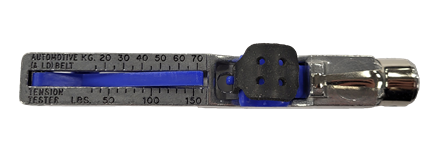
Even seasoned technicians have difficulty identifying correct—and incorrect—tension levels by pressing on a belt with their hands. That’s why our experts recommend using a hand-held belt tension gauge for accurate testing. These precision tensioning gauges are compact for easy carrying and relatively inexpensive. Be sure your gauge’s pressure range adequately covers both higher and lower pressures than your belt’s recommended settings to ensure accurate reading if improperly tensioned.
How to Check V-Belt Tension

- Safety First: Ensure compliance with facility PPE safety standards.
- Power Down: Disconnect and lock-out power to equipment to prevent unintentional startups and possibly injury.
- Calculate Deflection: Deflection is the distance a belt travels when a perpendicular force is applied to it midway between the pulleys (also called midspan). This is measured as 1/64” for every 1” of belt span when a load of 5% of the tensile strength is applied.
- Measure Belt Tension: With the indicator arm down, position the tension gauge longitudinally on the belt at midspan. Slowly depress the colored plastic pressure pad until you feel and hear a distinct “click”. Immediately remove the gauge and read the belt tension by observing the point where the top side of the indicator arm crosses the numbered scale on the gauge body.
- Adjust Tension: Compare the measured deflection force with the range of forces recommended. If less than the minimum recommended deflection force, the belt should be tightened. If more than the maximum recommended deflection force, the belt should be loosened.
- Recheck Tension: Repeat steps #4-5 until satisfied belt tension falls within manufacturer’s recommendations.
- Inspect System: Visually inspect the entire belt drive system for signs of belt cracks, pulley damage, bearing wear, etc.
- Power On: Restore power and turn equipment back on.
NOTE: It's normal to see a rapid drop in tension during the "run-in period" for v-belt drives. We recommend checking belt tension frequently during the first day of operation and adjusting as necessary.
Signs of Improper Belt Tension
How can you tell when a v-belt is too tight or too loose? Luckily, there are several signs that signify when it’s time to check belt tension. When a belt is too loose, it will start to slip on the pulleys and cause excessive friction and loss of energy. This heat buildup will lead to premature belt wear and shortened pulley life. When a belt is too tight, it will cause excessive stress on the entire drive system from belt to pulleys and bearings to shafts. This stress drastically increases the motor’s current consumption and can lead to component damage and costly system failure. Another sign of improper belt tension can be belt squealing or squeaking during start-up or operation.
Ask The V-Belt Experts
Still unsure if your belt is properly tensioned or having difficulty selecting a v-belt alternative? The in-house engineers at WM Berg can help you find the right standard or custom v-belts and pulleys for your drive system.