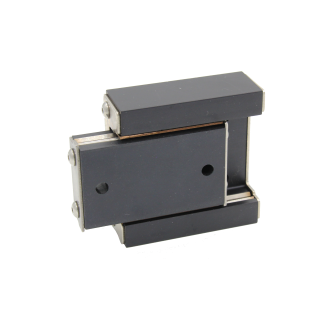
Precise linear motion is highly accurate and repeatable one-dimensional movement along a straight line. Both linear ball slides and linear roller slides accomplish this, but there are several distinct characteristics that differentiate the two assemblies. Linear ball slides consist of precision Grade 5 steel balls rolling along ground wire ways, while linear roller slides are constructed with precision rollers rolling along ground flat ways. Both assemblies are used to facilitate smooth linear movement in precision-critical applications like aerospace, manufacturing, robotics, medical and IT. This comparison takes a deep dive into use case considerations and key product features to help you decide which linear slide is right for your application.
5 Factors to Consider in Choosing a Precision Linear Slide Assembly
Choosing between a linear roller slide and linear ball slide largely depends on your intended use. While both assemblies facilitate linear motion, each has distinguishing features better suited for various conditions. Here are five general performance considerations to help guide your decision:
- Degree of precision – linear slide assemblies have multiple levels of precision; what is the minimum requirement for your application?
- Load bearing capacity – do you need to move light, medium or heavy-duty loads?
- Durability requirements – does your application have rigidity requirements?
- Environmental considerations – what does the operating environment look like (i.e. are there significant dust contaminates or the likes that could build up)?
- Vibration & shock limits – does your application endure impactful shock or vibration while operating?
Linear Ball vs. Linear Roller Slide: Which Type for Your Application?
Once you’ve identified your application’s design requirements, selecting a linear ball or linear roller slide becomes more straightforward as these considerations often pinpoint the correct type of linear slide you need. The following comparisons assume equal linear slide length, width and composition under optimal alignments and conditions.
Comparison Chart

Rolling Contact Surface Comparison
Linear ball slides feature a pointed rolling contact surface while linear roller slides offer ground flat ways.

Self-Cleaning Bearing Ways Comparison
Since the rolling surface contact of linear ball slides is pointed, the bearing ways are self-cleaning and expel potential debris during slide actuation.
Shock & Vibration Comparison
Linear roller slides have a stiffer construction than ball slides; this improved rigidity means long-term reliability under stressful vibration and shock conditions.
Precise Linear Movement Comparison
Both linear ball slides and linear crossed roller slides offer precise linear movement with extremely low coefficients of friction and minimum side-play. No additional lubrication required for either linear slide assembly.
Light to Medium Load Comparison
Linear ball slides are designed to provide precise linear movement for light to medium loads.
Medium to Heavy Load Comparison
Linear roller slides’ rolling contact surface is a line, supporting precise linear movement for medium to heavy loads.
WM Berg Answers Your Linear Slide Questions
Understanding conceptual differences in linear slide types is crucial for selecting the right linear slide assembly for your project. However, there are other factors to consider. WM Berg is well-versed in linear slide design and manufactures a complete range of off-the-shelf linear slide products, including linear ball slides, ultra-precision linear ball slides, linear crossed roller slides, rack driven ball slides and linear tables. Our team of engineers is on-hand to answer any questions you may have and help guide you to the most efficient and cost-effective solution for your application.